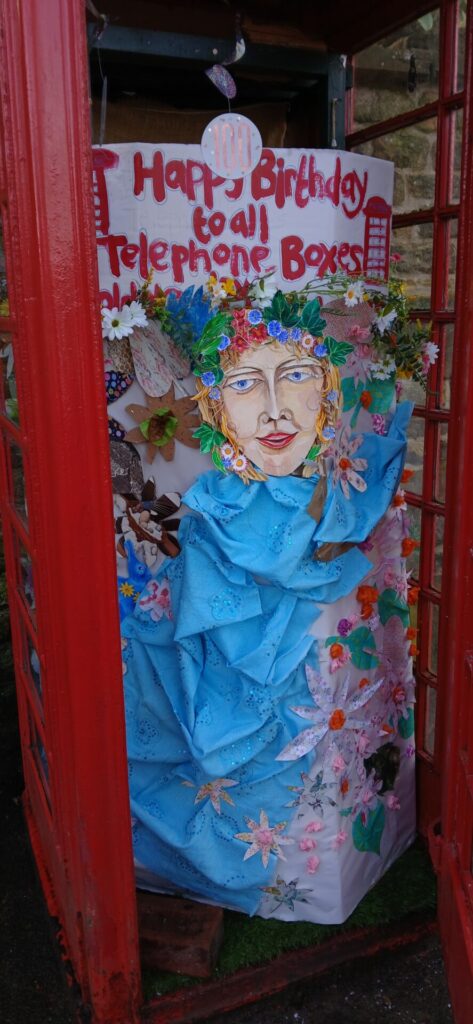
2026 marks the centenary of one of Britain’s most recognisable pieces of street furniture: The iconic red telephone box.
Designed by architect Sir Giles Gilbert Scott and first introduced in 1926, the bright red kiosks quickly became a familiar sight across towns and villages throughout the country. With their distinctive domed roofs and bold colour, they were designed not just to be practical but to stand out as part of the public landscape.
While their original purpose has largely faded in the age of mobile phones, many red telephone boxes have found a new role at the heart of their communities. Across the UK they have been adopted and transformed into everything from mini libraries and defibrillator hubs to art spaces and produce exchanges.
Here in the Holme Valley, several of these historic kiosks are still standing and continuing to serve the community in new ways. Holme Valley Parish Council owns phone boxes in Fulstone, Upperthong, Netherthong, Wooldale, Holme, Oldfield and central Holmfirth, with some now cared for by local groups who have adopted and repurposed them.
One example is the Wooldale phone box, which has been turned into a community veg exchange and has recently been decorated to mark the phone box centenary.
The parish council would like to thank the many local custodians who look after these small but much-loved landmarks and keep them active as part of village life.
Thanks also go to John Ford, whose work maintaining and restoring the kiosks has made him something of a local expert in preserving these distinctive pieces of street furniture.
A hundred years after they first appeared on British streets, red telephone boxes remain a familiar and much-loved part of the landscape — proof that even the most everyday structures can become part of a place’s story when communities choose to look after them.